
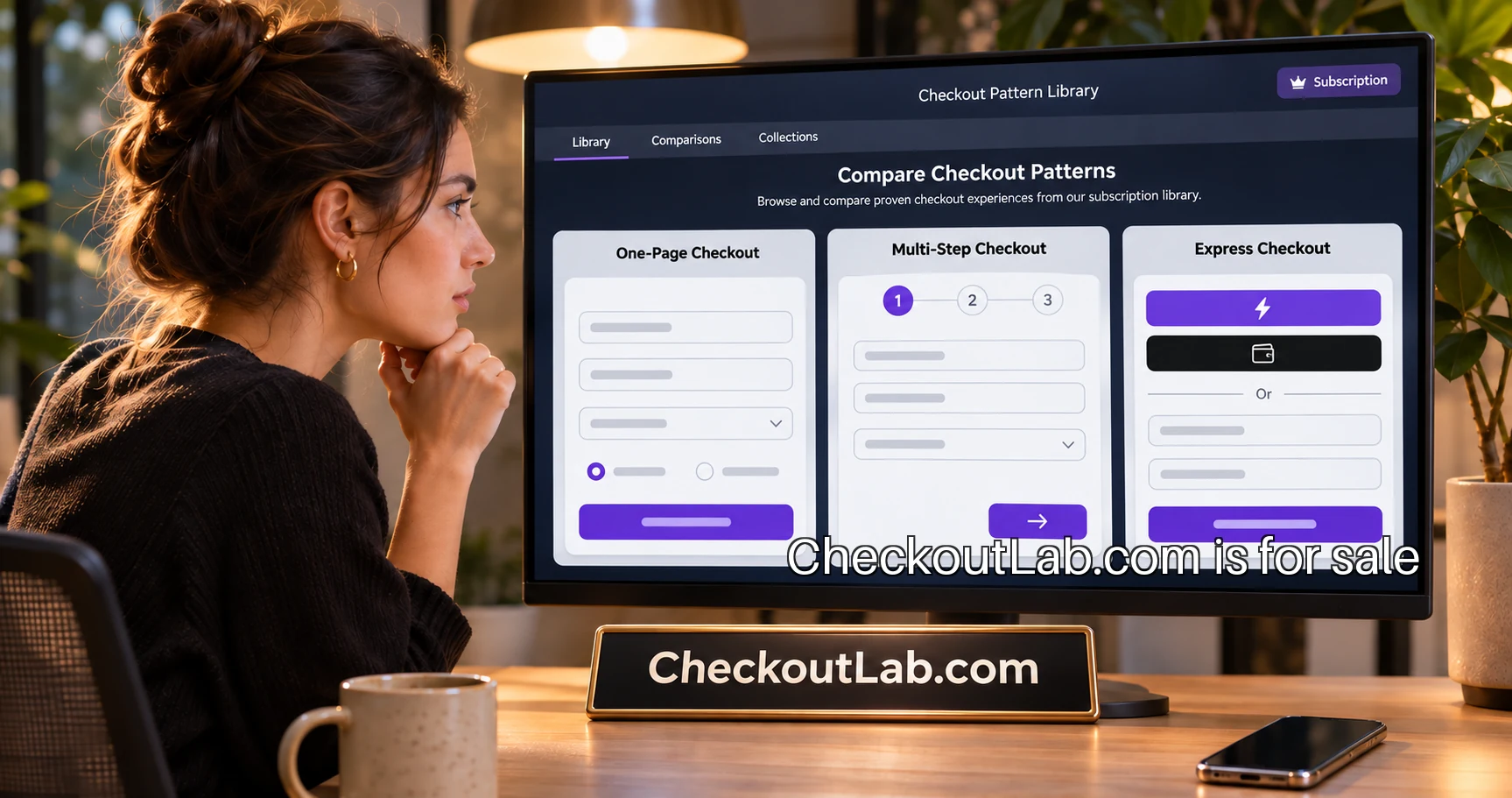
Product teams often need an example before they need another opinion. Someone redesigning delivery selection wants to inspect the sequence, wording and choices used elsewhere. A founder could build a reference library that organizes those examples with enough context to support a useful comparison. CheckoutLab.com fits a publication that treats checkout as a subject to examine carefully, with a recognizable home for the collection as it grows.
The first reader could be a product designer working on a specific part of the purchase journey. A commerce founder making an early interface decision might use the same collection in a different way. Choose the primary reader first. A professional design reference needs detailed filtering and reliable metadata; a beginner's guide needs more explanation around each example. The initial product should have a clear answer to who opens it and what they can do next.
Begin with a defined collection
A first release might document delivery selection in a small, clearly described group of stores. Each entry would record the date, device, market, cart context and steps taken before the screen appeared. It would include a short explanation of the choice being presented, with the relevant wording transcribed for readers who need to search or compare it. That structure makes the library more useful than an unorganized gallery of screenshots.
The founder would need to decide what “benchmark” means in this product. It could mean a consistent descriptive comparison, rather than a ranking of commercial performance. A record can show where a delivery estimate appears and how a user changes an option. It cannot establish which interface produces better business results merely by looking at the screen. A method note should make the comparison clear and give contributors the same recording rules.
W3C's forms tutorial provides one useful reference for describing form elements and interactions consistently. A library could use that vocabulary when tagging labels, grouped controls and feedback. The editorial value would come from selecting useful examples, recording their context and explaining the design decision each example makes visible.
Give each record a job
Imagine an illustrative designer asked to make delivery timing clearer. The library could let that reader filter for a specific market and device, then compare examples where timing appears beside the delivery choice, in the order summary or earlier in the cart. Each record would show the route to that information. The designer leaves with a few concrete patterns to explore and a better question for their own users.
A comparison article could sit above those records. It might examine three ways of handling a delivery estimate that changes after an address is entered. The article would explain the sequence in each example and the information available at each point. It would link directly to the underlying records so a reader can inspect the context. That connection between editorial explanation and structured evidence could become the publication's most useful habit.
Make freshness part of the product
Checkout interfaces change. A record should show when it was captured and when it was last reviewed. If a store changes its flow, the library can retain the earlier version as an archive while marking the current one separately. Readers should be able to distinguish a historical example from a recently checked pattern without opening several pages to work it out.
The collection would also need a repeatable review process. A contributor records the scenario; an editor checks the metadata and description; a later review confirms whether the example still exists. W3C's introductory accessibility checks demonstrate the value of a defined review scope. The library can similarly tell readers exactly what an entry documents and keep additional assessments separate from the basic record.
Distribution through editorial usefulness
A credible early distribution path is a newsletter answering one narrow design question per issue. Each issue could connect a short explanation to several records in the library. Designers who use the examples in a meeting have a practical reason to return when the next question arrives. A public sample collection lets prospective subscribers inspect the depth of the records before deciding whether the wider product suits their work.
The business could later explore team subscriptions, commissioned collections or educational partnerships. Those are different offers and would need their own access rules and editorial boundaries. The first release could simply establish that the collection is useful enough to revisit. Searchable records, clear comparison pages and a reliable publishing schedule would give the founder a stronger base than launching many formats at once.
The first operating milestone
Execution would require a capture method, an editorial style guide, image permissions where applicable, a review calendar and a way to correct records. The founder should also decide how readers report an outdated example and how that report appears in the editorial queue. A reference product earns its usefulness through these ordinary maintenance tasks as well as through the original selection of material.
A sensible milestone is a reader using the library to prepare a real design discussion. Ask which record helped, what context was missing and how they searched for it. Those answers would guide the next collection and the next filter. CheckoutLab.com could hold the reference library, its newsletter and its educational articles under one focused identity.
Use the inquiry form to describe the publication you want to build and the audience it would serve. PremiumBrands.com can discuss acquiring the domain or exploring a partnership around the name.